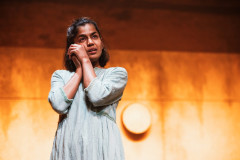
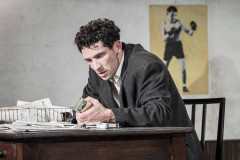
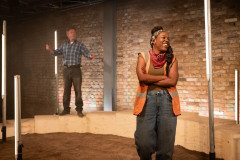
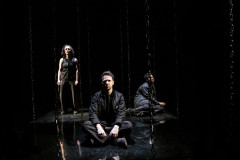
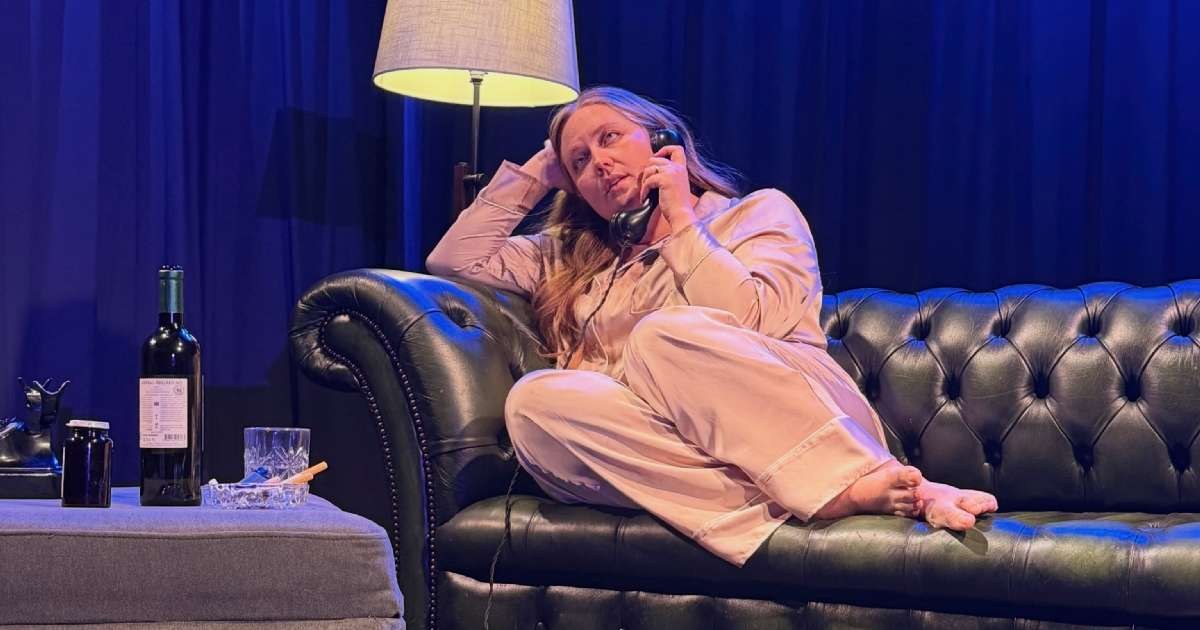
 The reviews are in for The Seven Deadly Sins / The Human Voice at the Charing Cross Theatre, a double bill that sets Kurt Weill and Bertolt Brecht’s sung satire of ambition beside Francis Poulenc and Jean Cocteau’s one-woman telephone opera, both sung in English. Director Alejandro Bonatto treats Anna and Elle as one woman at two points in her life, with the soprano Katherine McIndoe taking both roles. On McIndoe the critics come close to agreement, and several give equal credit to the pianists Adrian Salinero and Elspeth Wilkes. Where they part company is the linking idea: some find it elegant, while Everything Theatre and JackStage say it is hard to follow without reading the programme first.
The verdict: eight reviews in so far: four four-star notices, one at three and a half, one at three and one at two, with Rhombus Rota giving no rating. Across the seven that score it the average is 3.5 out of 5, and nearly every one of the eight singles out Katherine McIndoe.
What are critics saying about The Seven Deadly Sins / The Human Voice?
SeatPlan
Reviewer: Patrick Jeremy
“There is outstanding work from the two musical directors, Elspeth Wilkes and Adrian Salinero, who impressively perform the piano reductions of these works, supported by Kepa Malgorzata on percussion and Salinero doubling on a solo flute for one of the Elle arias. This is complex music and both Wilkes and Salinero bring a full palette of colours to the piano scores, making it an evening of superb musicianship. With only 3 singers and 3 musicians, each performer is absolutely vital and Bonatto ensures that the musicians are effectively integrated into the dramatic context of both pieces.”
LondonTheatre1
Reviewer: Chris Omaweng
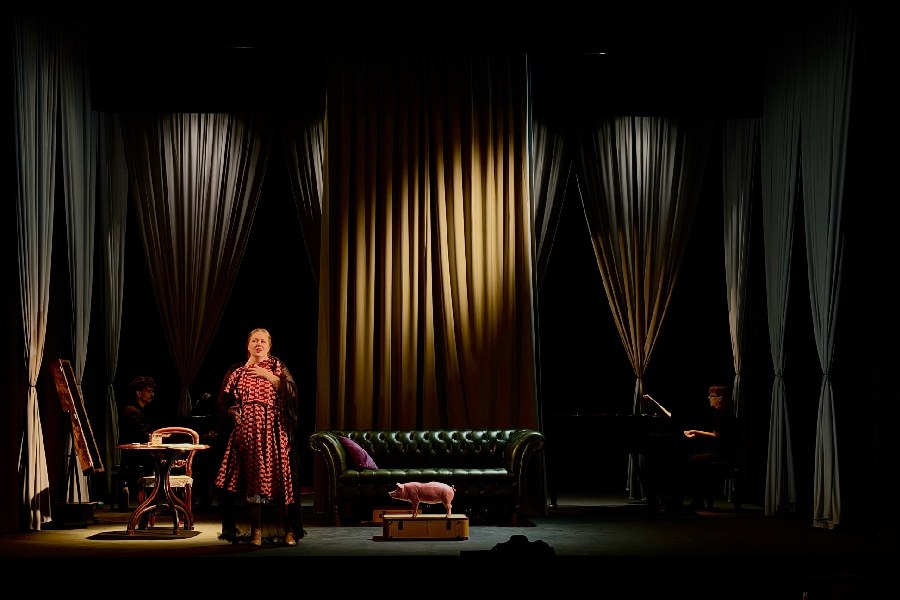
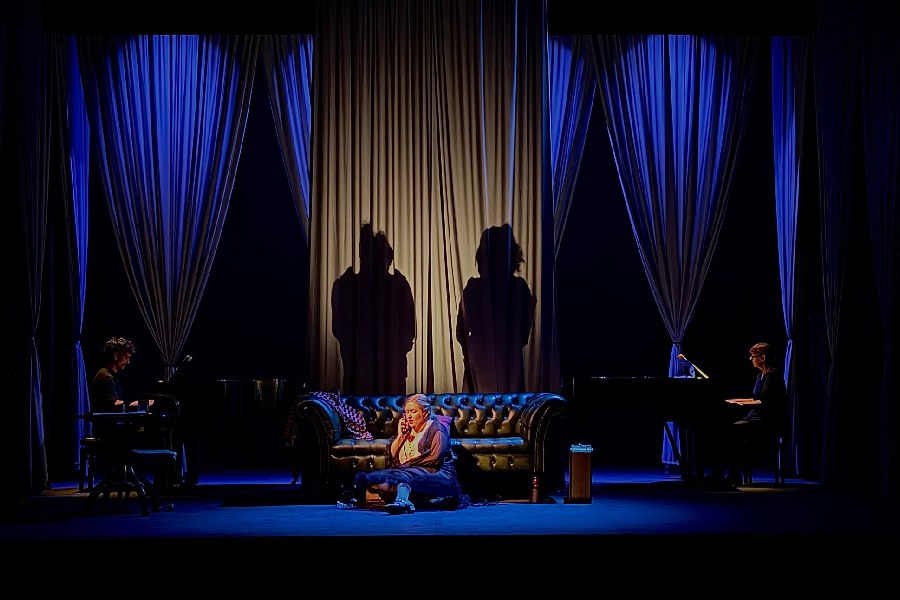
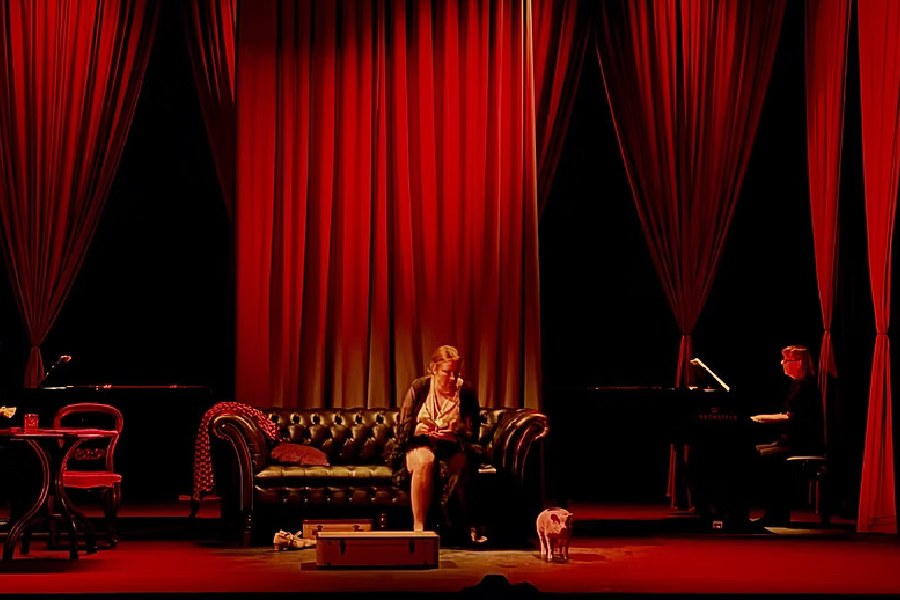
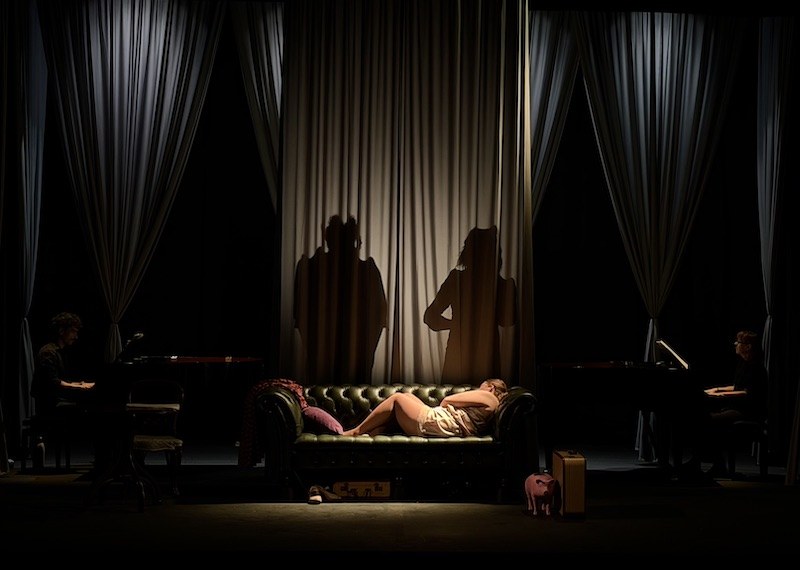
“The stagecraft fits the relatively small Charing Cross Theatre space well. Anna’s parents appear as ‘shadows’ behind curtains – they are not physically where she is on her travels, but whatever impressions they left on her in her formative years still have some impact. If Anna I and Anna II have been merged into one, this double bill presents Elle, in effect, also as Anna but a bit later in life, and so (spoiler alert), taking everything together, as the New Testament would have it (Romans chapter vi, verse xxiii), “the wages of sin is death”. Purists won’t like the adaptations. That’s their loss. Two very different operas are presented together in a production that flows well, works well and is performed well.”
The Spy in the Stalls
Reviewer: Ellen Cheshire
“Ultimately, this is more than a pairing of two very different operas. By presenting The Human Voice as another chapter in Anna’s story, Bonatto creates a portrait of a woman who spends the first part sacrificing herself in pursuit of money and survival, only to find herself with nothing left when the relationship she has staked everything on comes to an end. It is an elegant and remarkably economical production that makes the two works feel like parts of the same tragic story.”
North West End
Reviewer: Gaurav Singh Nijjer
“The real experiment of the evening is not simply presenting two operas together but asking what happens when they are allowed to speak to each other. The transition from the crowded, outward-facing world of The Seven Deadly Sins to the intensely private world of The Human Voice gradually shifts the question from how a woman survives the world around her to what happens when there is no one left to answer her. The staging itself follows this trajectory. The physical world contracts as the evening progresses, moving from the fuller theatrical environment of the first opera into the much more contained world of the second, mirroring the protagonist’s narrowing emotional world.”
The Reviews Hub
Reviewer: Patrick Shorrock
“The translation of Cocteau’s libretto by Joseph Machlis is outstanding in its ability to retain the rhythm of the French words while rendering them into clear English in a piece that could not be more Gallic if it tried. It probably helps that we are generally dealing with recitative in ordinary language, albeit of a very high order of expressiveness and intensity. The result is riveting, even if at 45 minutes it’s almost too long. But not quite.”
Everything Theatre
Reviewer: Dean Wood
“Immense congratulations to McIndoe, our leading lady. Her powerful and enticing voice gives light and shade to the emotional circumstances of both women, and she carries the characters’ journeys with her captivating singing. Though, having reduced the capacity of the theatre, we are close to these intimate performances and do see the instances where some more detailed direction from director Alejandro Bonatto may help some moments to keep feeling moving between musical phrases.”
JackStage
“abstract, intimate double bill of opera in need of more context”
Reviewer: Emma Knott
“If you are considering booking to see The Seven Deadly Sins / The Human Voice, I strongly recommend reading up on their contexts if you aren't already familiar. Especially the social-political environment of 1930s Europe, in how this frames the first's commentary on Nazi Germany. After a live piece of entertainment, we want to feel as if we have taken something from the evening. But as these pieces reach almost a century-old, they struggle to hold much resonance with audiences today. A unique night nonetheless, and something fresh for a limited 10-show run at the Charing Cross Theatre until the 19th September.”
Rhombus Rota
Reviewer: Gonzalo
“McIndoe, who plays Ella, is the only cast member in The Human Voice. Equally instrumental to the opera is Wilkes on the keys (also musical director), who accompanies McIndoe throughout the whole piece. They are joined by Salinero on the flute for a brief but significant section of the opera. The Human Voice gives McIndoe numerous opportunities to display her talent, which she takes full advantage of. Her performance is heartbreaking, both musically and from an acting perspective. An interesting aspect of this opera is that it shows us Ella’s experiences as she engages in a series of phone calls, of which we only hear Ella’s side. However, Wilkes’s piano is undoubtedly a second character in the opera, as it sometimes feels as though the piano is providing the other half of the conversations.”
For more critics’ verdicts on this autumn’s openings, browse our London theatre reviews.
The Seven Deadly Sins / The Human Voice runs at the Charing Cross Theatre until Saturday 19 September 2026, a limited season of ten performances that began on Friday 11 September.