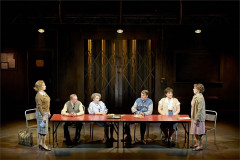
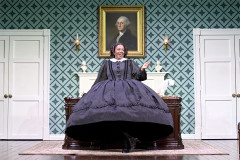
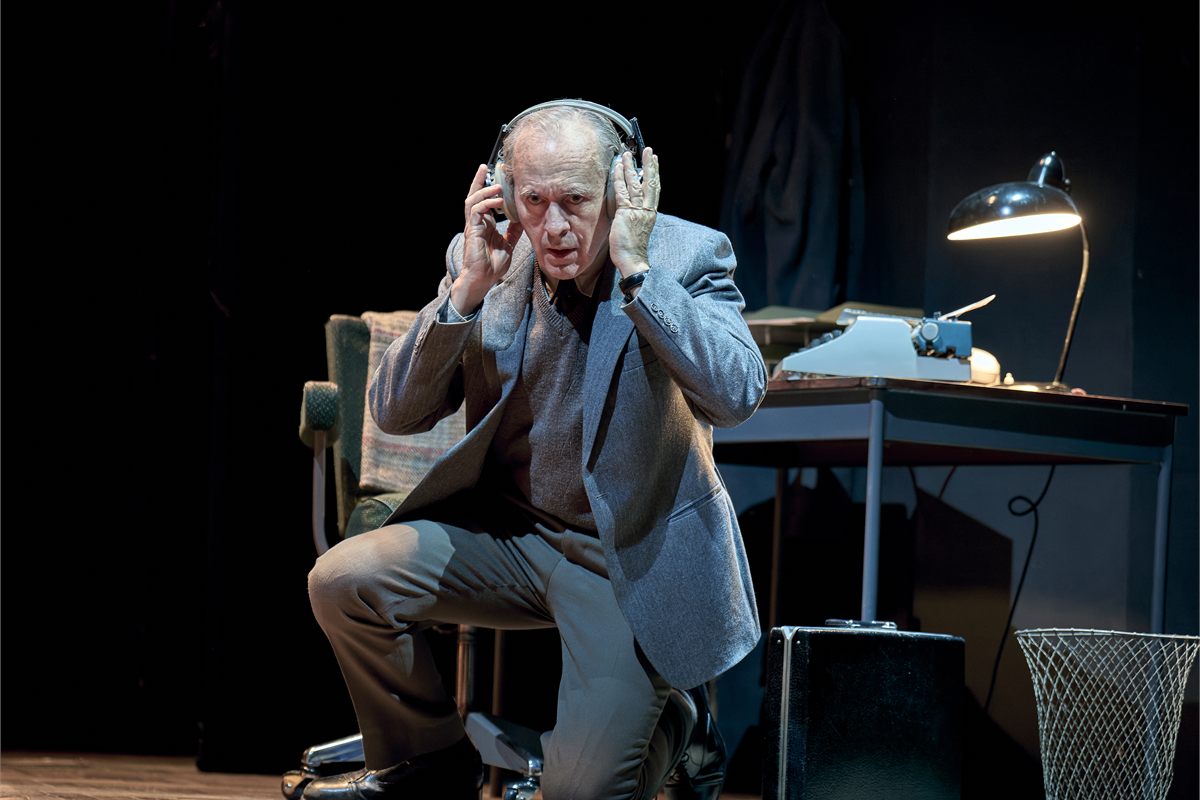
 Robert Icke's The Lives of Others at the Adelphi Theatre comes from an Oscar-winning German film, and behind the film stand a real secret police, a real prison and an archive of Stasi records that still runs to more than 111 kilometres.
The Lives of Others is the first stage version of Florian Henckel von Donnersmarck's 2006 film Das Leben der Anderen, and it reaches the Adelphi Theatre twenty years after the film was made. The history the play stands on is worth knowing before the lights go down: the institution it depicts, the film it adapts, and the argument that film started in Germany.
A secret police that kept the country on file
The Stasi, properly the Ministry for State Security, was East Germany's secret police from 1950 until 1990. Alongside its own officers it relied on a far larger network of unofficial informants drawn from everyday life. The writer Anna Funder, author of Stasiland, puts the share of East Germans informing on relatives, friends and colleagues at no fewer than one in 50.
The play is set, as the film is, in East Berlin in 1984. The Stasi captain Hauptmann Gerd Wiesler is ordered to bug the flat of the playwright Georg Dreyman and his partner, the actress Christa-Maria Sieland, and he listens from the attic as their lives go on beneath him. The operation owes less to state security than to the culture minister Hempf's interest in Sieland, and the longer Wiesler listens, the less sure he becomes of whose side he is on.
How the film began
Donnersmarck wrote and directed it as his first feature. The starting point, he has said, was a remark that Maxim Gorky attributed to Lenin: that Beethoven's Appassionata made him want to be gentle with people at a time when the revolution required him to be merciless. From that came a single picture, of a man in headphones who is supposed to be hearing an enemy of the state and hears something beautiful instead. The historian Timothy Garton Ash, writing in The New York Review of Books, traced the film's pivotal piano scene back to the same passage.
Ulrich Mühe played Wiesler, with Sebastian Koch as Dreyman, Martina Gedeck as Sieland and Ulrich Tukur as Wiesler's superior, Grubitz. The film won the European Film Award in December 2006 and, in February 2007, the Academy Award for best foreign-language film.
The actor who had stood on the Wall
Mühe brought more than technique to the part. Born in Grimma, Saxony, in 1953, he trained as a builder and was then conscripted into East Germany's army, where he was posted to guard the Berlin Wall. Heiner Müller later drew him into the East Berlin theatre, and by the time of the film he was one of Germany's most celebrated actors. He died of stomach cancer in July 2007, aged 54, months after the Oscar, as The Guardian's obituary recorded.
The prison the film could not use
The film opens in Hohenschönhausen, the Berlin prison where the Stasi held political prisoners. It is now a memorial, and its guided tours are led by former prisoners and historians. Donnersmarck was refused permission to shoot there. Hubertus Knabe, the memorial's director, objected to the film making a hero of a Stasi man, and when Donnersmarck cited Schindler's List in reply, Knabe's answer was short: "There was a Schindler. There was no Wiesler."
Could a Wiesler have existed?
That question has followed the film ever since. Funder called it "a superb film, a thing of beauty", while arguing that its story could not have happened: Stasi officers were themselves closely watched, and a case like Dreyman's would have passed through many more hands than one listener's. The play keeps Wiesler's change of heart at its centre, so the question comes to the Adelphi with it.
What happened to the files
The film ends after reunification, with Dreyman reading his own file, and that part is plain history. As East Germany collapsed, Stasi staff set about destroying records until citizens stormed the offices to stop them. The Stasi Records Act came into force on 29 December 1991, and on 2 January 1992 the first East Germans read what the state had compiled about them. The Stasi Records Archive, now part of Germany's Federal Archives, holds more than 111 kilometres of documents.
From the screen to the Adelphi
Robert Icke adapts and directs, in a world premiere presented by Sonia Friedman Productions and Winkler & Smalberg. Stephen Dillane plays Wiesler, Keira Knightley is Christa-Maria Sieland and Luke Thompson is Dreyman, with Andrew Woodall as Hempf and Paul Higgins as Grubitz. Hildegard Bechtler designs the set and costumes, and Max Richter has written original music. The production opened on 29 October, and our review roundup gathers what the critics made of it.
The Lives of Others runs at the Adelphi Theatre until Saturday 9 January 2027. The running time is 2 hours 10 minutes, with no interval.