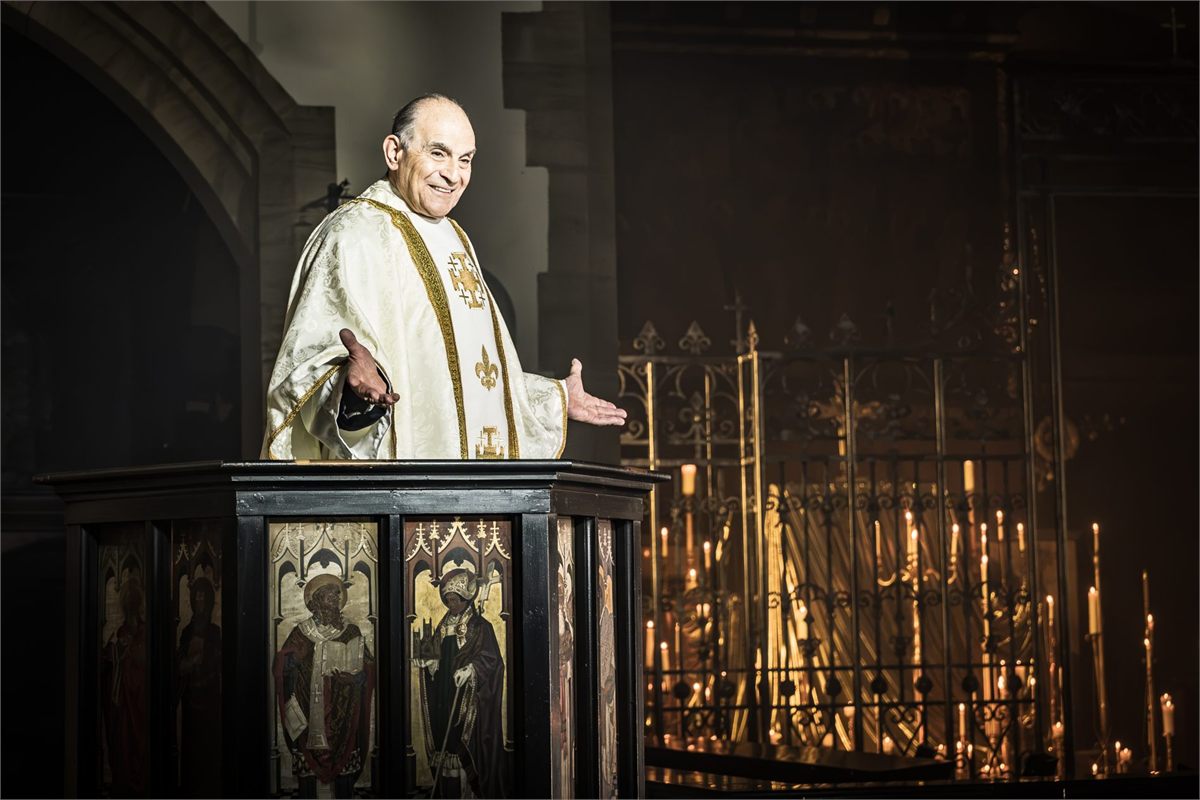
 The notices are in for the Orange Tree Theatre’s revival of Murder in the Cathedral, which has left its Richmond home during building work and taken T.S. Eliot’s 1935 verse drama into St John the Divine, the church across the road. David Suchet plays Thomas Becket, the archbishop who returns from exile in 1170 knowing the king’s knights will come for him, in a staging by Tom Littler and Francesca Ellis with a chorus drawn partly from the local community. The critics are warmer about the production than about the play: all ten rated reviews give it four or five stars, and every one of them puts Suchet at its centre, but they disagree over how much of Eliot’s poetry survives the sung choruses, and two of the nationals still wonder whether the text deserves the care lavished on it.
4.3 / 5 from 11 criticsThe verdict: ten reviews carded so far, every one of them rated: three five-star notices and seven at four stars, an average of 4.3 out of 5. Every critic singles out David Suchet’s Becket, and almost all of them credit the church itself, with Peter Mumford’s lighting close behind. Where they part company is over the play and its music: Theatre Weekly calls the sung chorus the standout of the evening, while The Guardian and The Reviews Hub feel the settings blur some of Eliot’s words, and The Standard and The Guardian both doubt the text even as they praise the staging. The Times, The Telegraph and The Stage have also reviewed it; those notices sit behind paywalls and are listed at the foot of the page.
What are critics saying about MURDER IN THE CATHEDRAL?
Theatre Weekly
"Littler's Murder in the Cathedral takes an already beautiful text and then knocks it out of the park in all aspects of the production."
Reviewer: Maggie O'Shea
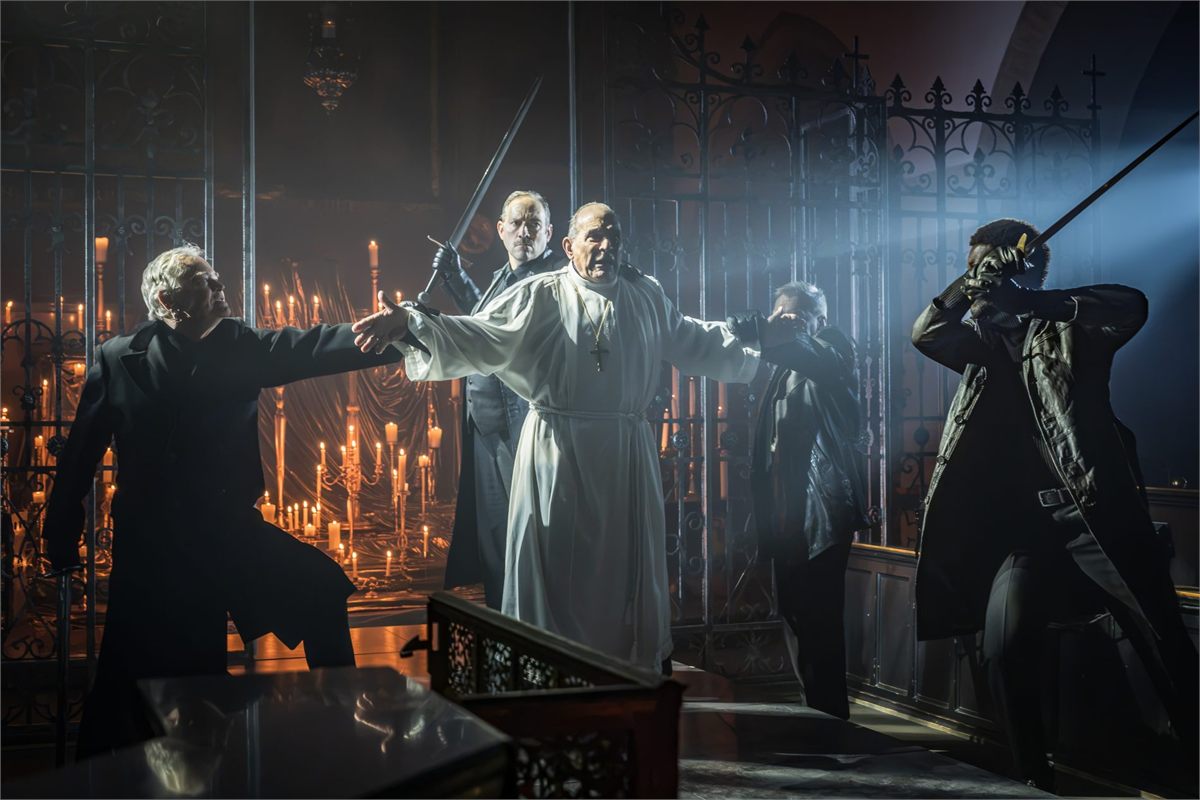
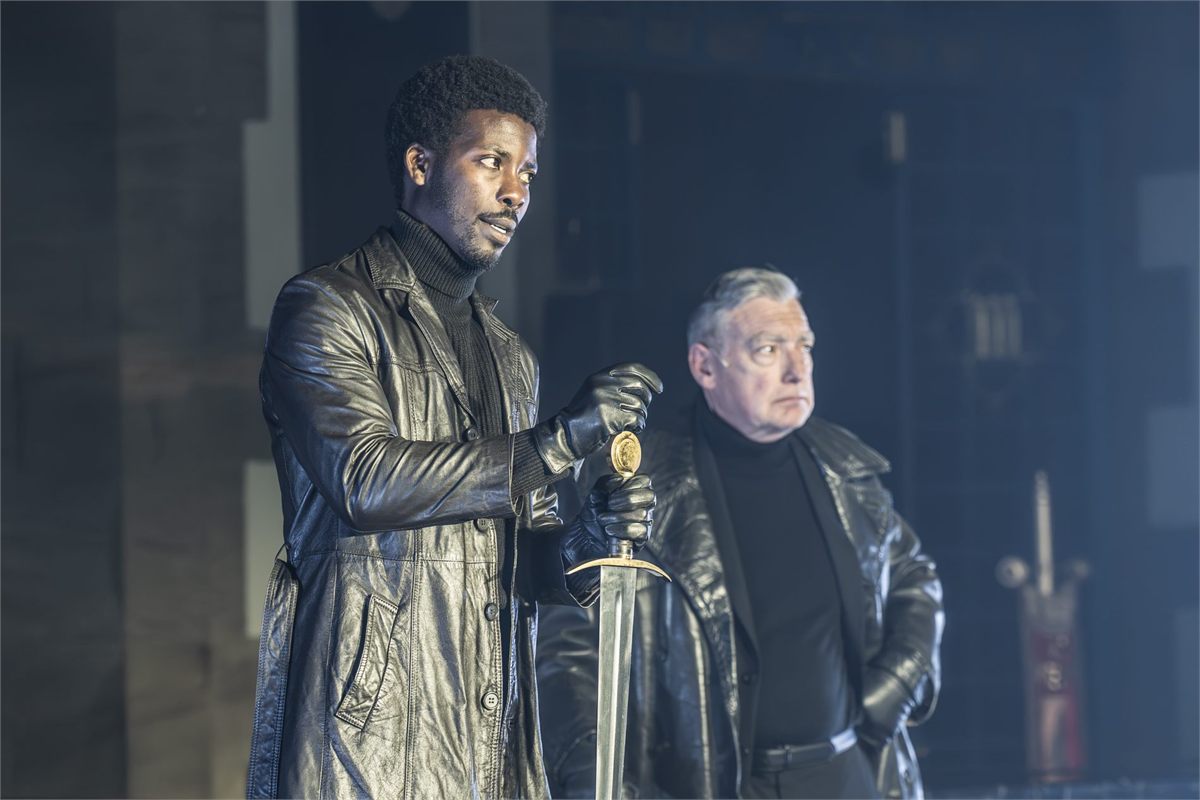
Maggie O'Shea thinks staging the play in a working church was an inspired call, and gives special credit to Peter Mumford, whose lighting turns the building into a fully working theatre. Cat Fuller’s 1930s suits for the knights, she argues, make Eliot’s parallel between Henry II and the rise of fascism impossible to miss.
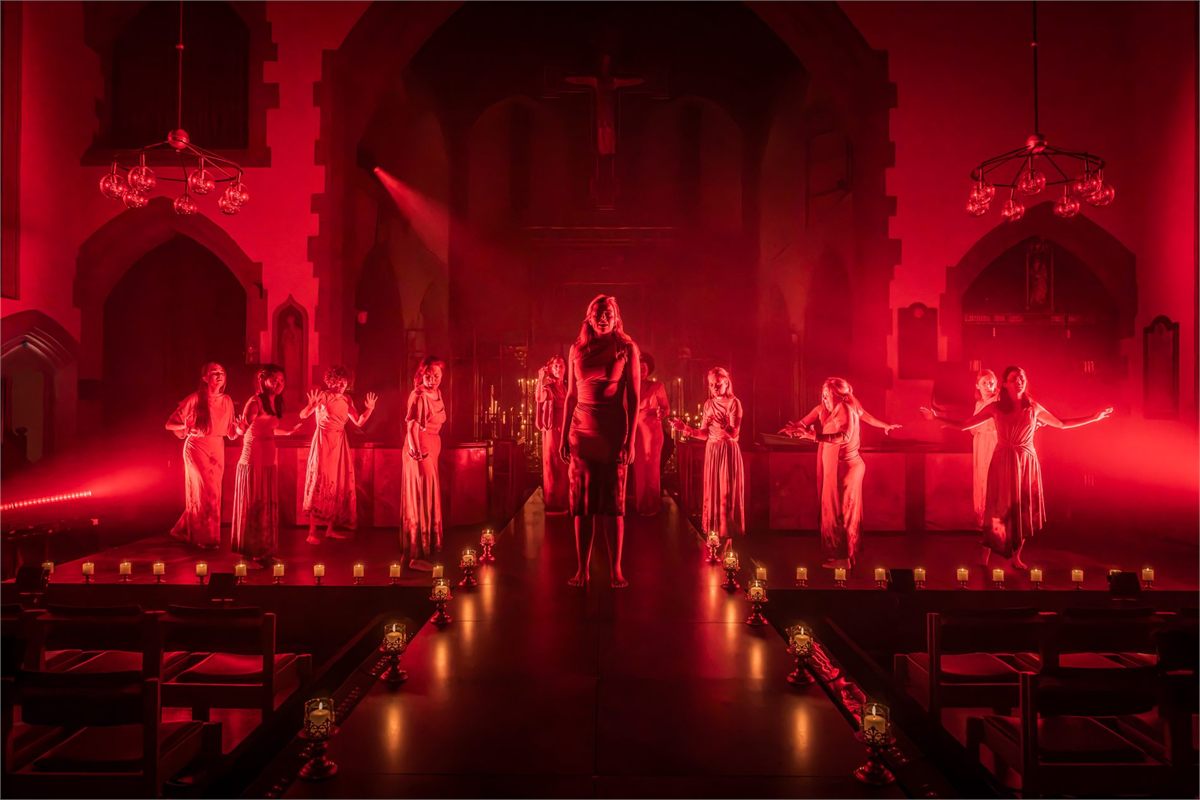
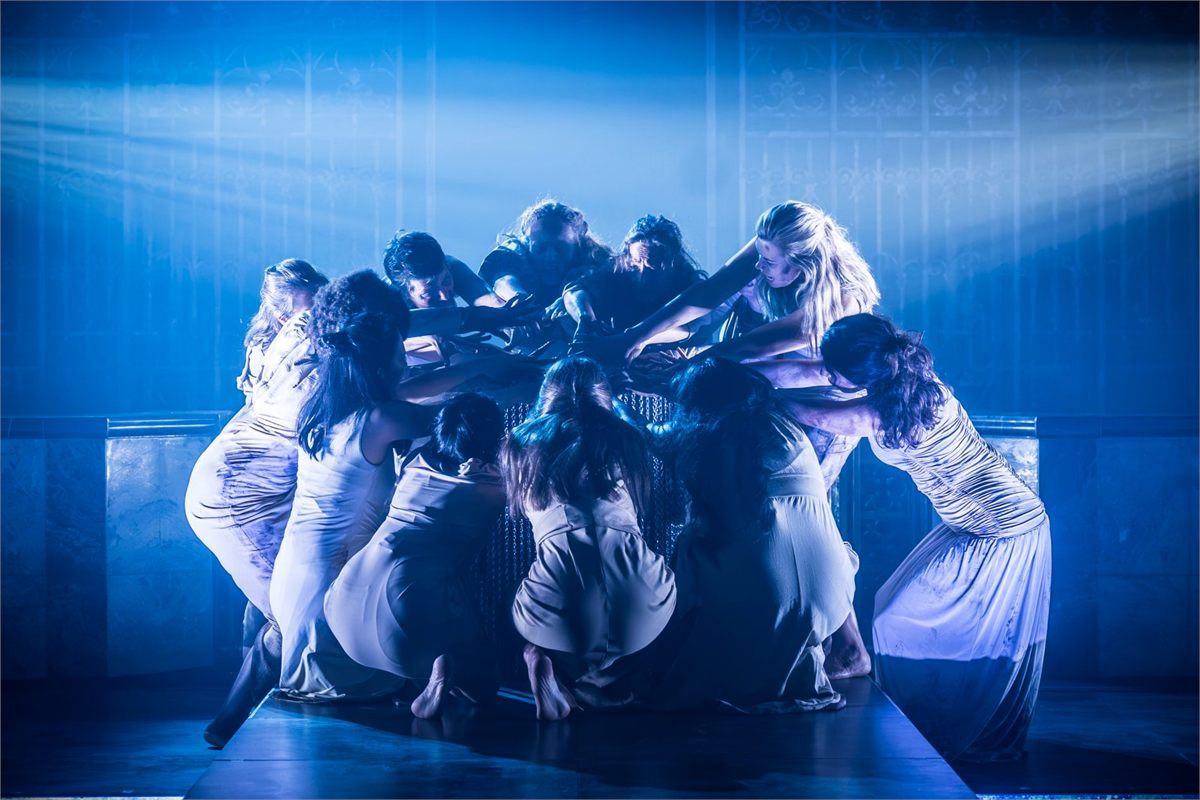
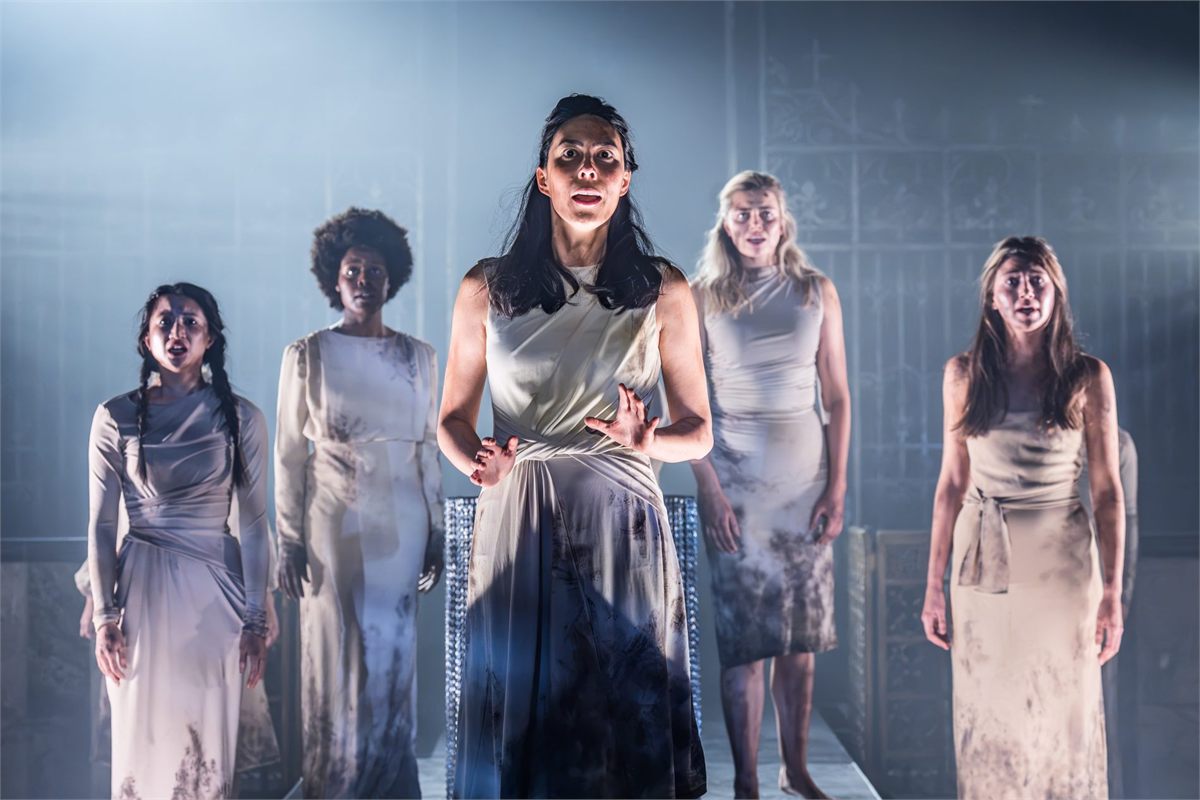
"the standout performance might be from the ‘Canterbury women’, a haunting Greek chorus"
She finds David Suchet authoritative with flashes of vulnerability, and says Orlando Gough’s score alone is worth the ticket.
The Spy in the Stalls
"Deeply atmospheric and moving, this is an unmissable production"
Reviewer: Jonathan Evans
Jonathan Evans admits he expected a thankless evening on hard pews, and says the production gets everything right instead. He credits Max Pappenheim’s sound design with keeping every word clear in an echoing nave.
"Central to the performance is David Suchet’s unassumingly outstanding Becket. A voice rich in tone and in defiance"
He enjoys the knights recast as leather-coated modern gangsters pleading their case into a handheld microphone, and lingers on the chorus’s closing song.
View from the Gods
Reviewer: Simon Jenner
Simon Jenner, who has known the play since his teens without ever seeing it, thinks this staging may define it for a generation. He praises Tom Littler and Francesca Ellis for working with the scale of the church rather than against it, and calls the set and lighting a festal triumph.
"Suchet seems to engrave the walls with his voice, ringing out like Roman bronze."
His one reservation is Eliot’s own: verse that does not always escape its period. The same notice also runs at FringeReview.
The Guardian
"Gather in wonder at David Suchet’s excellent archbishop"
Reviewer: Mark Lawson
Mark Lawson is the most guarded of the critics about the text, arguing that no staging can hide its oddities, from a classical chorus at one end to the knights’ lecture to the audience at the other. He also feels the choruses are set to music more than Eliot intended, which blurs some of the poetry.
"Always a meticulous actor, Suchet makes each gesture and syllable precise"
He admires the four actors doubling as tempters and knights, and closes by suggesting that churches this dramatic would never lack a congregation.
The Standard
"David Suchet is spellbinding"
Reviewer: Nick Curtis
Nick Curtis doubts the play itself, finding Eliot’s drama dense and effortful to modern ears, but argues that the Victorian church turns those flaws into virtues. He hears clear present-day echoes in the knights’ self-justification.
"there is something audacious and magnificent in Tom Littler and Francesca Ellis’s staging"
He calls Suchet’s verse-speaking beautiful and predicts nothing on a London stage this year will be as strange or as fascinating.
WhatsOnStage
Reviewer: Sarah Crompton
Sarah Crompton calls the balance between liturgy and drama hard to pull off, and judges that this staging manages it. She singles out Orlando Gough’s settings for the community chorus and Mumford’s lighting, which floods the church red as the knights arrive.
"If you’re ever going to see this haunting oddball of a play, this is how to do it."
Suchet, she writes, is imposing and human at once, and the play’s questions about resisting tyranny still land.
BroadwayWorld
"Suchet is magnificent as a dignified Thomas Becket in the latest production from the Orange Tree Theatre"
Reviewer: Aliya Al-Hassan
Aliya Al-Hassan suggests a little reading on the history first, then praises a cast who bring a play built on speeches to active life. She notes the unaccompanied harmonies of the Women of Canterbury, shaped by Lizzi Kew Ross’s movement direction, and calls Mumford’s lighting mesmeric.
"As the door is finally opened to the murderous knights, his hands shake ever so slightly"
For her, it is the small human fear behind the piety that makes Suchet’s Becket.
The Reviews Hub
"Powerfully atmospheric"
Reviewer: Phoebe Taplin
Phoebe Taplin calls it a confident, ambitious revival and counts the knights’ prose address to the audience among Littler’s strokes of genius.
"David Suchet plays Thomas Becket with a magnetic mix of saintly calm, gravitas, and charisma."
Her reservations are small: the mud-smeared chorus sits oddly against Becket’s pristine robes, and singing so much of the chorus costs some clarity of the words.
LondonTheatre1
Reviewer: Chris Omaweng
Chris Omaweng warns of hard wooden chairs across two long halves, but reports clear sightlines and crystal-clear sound. He finds the pace slow in places.
"the sometimes sluggish pace of proceedings is outweighed by the dense and foreboding atmosphere the production creates"
He ends on the play’s surprising relevance and calls the evening deeply moving and highly engaging.
West End Best Friend
Reviewer: Lisamarie Lamb
Lisamarie Lamb finds the first act slower than the second, but says the evening grows steadily more absorbing. She picks out Ben Caplan’s ease with the verse, Mumford’s use of shadow and a couple of genuine jump scares.
"He's a joy to watch, making Eliot's language sound so natural"
Speakers fitted to the backs of the chairs, she adds, mean no word is lost to the acoustics.
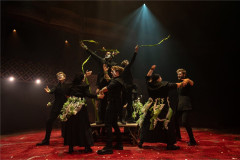
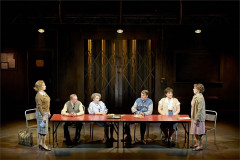
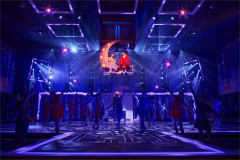
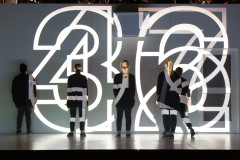
Production photographs by Marc Brenner.
Also reviewed by: The Times (Clive Davis, "David Suchet makes every word count"), The Telegraph ("David Suchet brings TS Eliot's dusty satire roaring back to life") and The Stage (Tom Wicker, four stars, "Puts the icon in iconic"), whose reviews sit behind paywalls or a registration wall.
The Orange Tree’s own stage is closed for building work, and the critics have been following its company around Richmond: their verdicts on a small and quiet light are collected here, and this week they have also had their say on Triumph at the Almeida and 4.48 Psychosis at the Linbury Theatre.
Murder in the Cathedral runs at St John the Divine, Richmond, until 7 November 2026, before transferring to the Theatre Royal Bath from 10-21 November.
For more information, visit the official website.