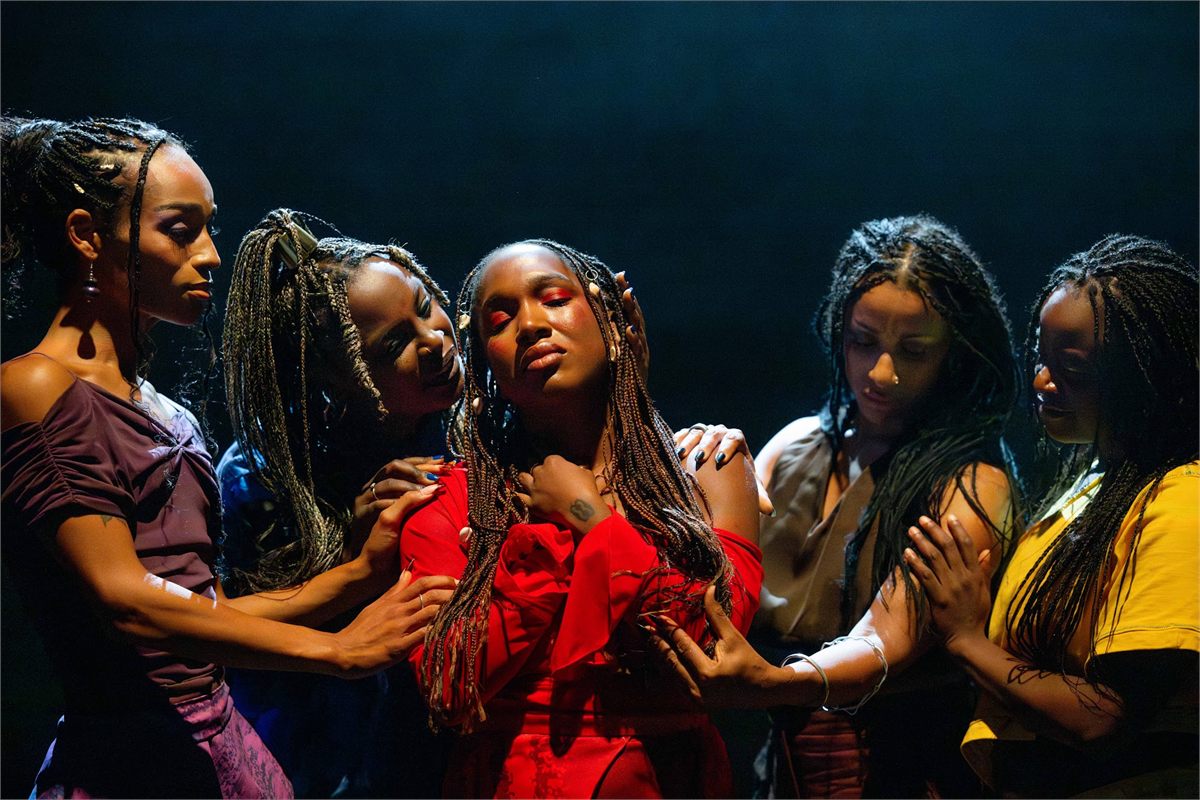
The reviews are in for for colored girls who have considered suicide / when the rainbow is enuf, Ntozake Shange’s 1970s choreopoem, which has reopened the rebuilt Yard Theatre in Hackney Wick in a production directed by Diane Page with original music by Jammz. Five performers – Cherrelle Skeete, Nadine Higgin, Tatenda Naomi Matsvai, Ibilola Rossi and Alex Thomas-Smith – play seven women known only by the colours of the rainbow, on a bare stage lit by Ali Hunter. The critics are united on the cast, and on the sheer staying power of Shange’s writing fifty years on; where they divide is over whether this stripped-back staging catches the full force of it, and whether five actors sharing seven roles makes the shifts between them clear enough.
The verdict: thirteen notices in so far – one five-star, four four-star, four three-star, three outlets that publish no rating, and The Telegraph behind a paywall. Among those that do score, the average is 3.7 out of 5, and all nine of them find the five-strong cast the production’s greatest strength.
What are critics saying about for colored girls who have considered suicide / when the rainbow is enuf?
The Reviews Hub
Reviewer: Scott Matthewman
"The emotional impact, from devastating loss and pain to joy, laughter, and dance, shows that the power of Shange’s work has not diminished in the 50 years since its first performance. It may have taken half a century to arrive in London, but it feels like a powerful statement with which to open the Yard’s new venue and its new era: one eye to the past, but profoundly contemporary."
The Standard
“Ntozake Shange’s legendary impressionistic play is a suitably adventurous addition to the reopened, ever-exciting Hackney Wick theatre The Yard”
Reviewer: Nick Curtis
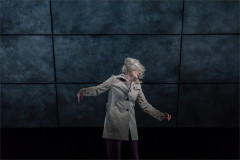
Page’s production fits the stripped-back ethos of the Yard. There’s no set, just a series of rainbow lighting states and a new soundtrack composed by Jammz. The superb ensemble of five wear colour-coded costumes. Some of the soliloquies are celebrations of black female sexuality and power. Others are harrowing tales of abuse, assault, abortion. Some sound impishly personal, Shange exploring her own disappointing love affairs, or the sense of a partner oppressing her identity.
theartsdesk
“Fine cast shows Ntozake Shange’s groundbreaking piece still has teeth and dynamism”
Reviewer: Helen Hawkins
Much of this material was explosive in the 1970s, especially live in a theatre; now these are more commonplace themes on our screens and stages, though never outmoded ones. Despite the piece’s age, it still has the rawness and edginess of something created this year, and its insistence on the vitality of Black women’s lives has not lost its potency. Shange wasn’t alive to see it (she died in 2018), but in 2021 an all-male piece – for black boys who have considered suicide / when the hue gets too heavy, by Ryan Calais Cameron – took her template and presented the other side of the coin, as six young Black men explored the pressures of their 21st century lives, some ending tragically. Both productions have been graced with exceptional casts and creative teams.
Time Out
"Starkly moving first UK revival of Ntozake Shange’s landmark choreopoem"
Reviewer: Nina Culley
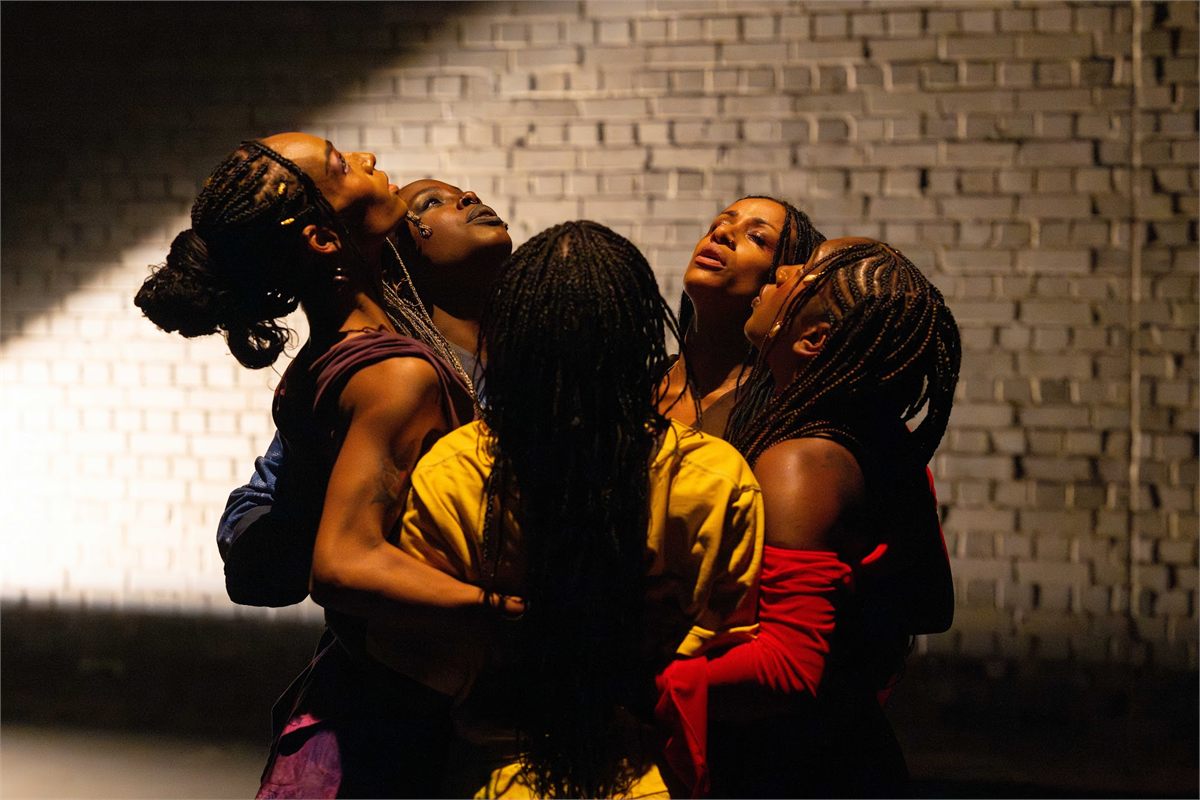
"Upon arrival, the first thing you’ll notice is that there’s nothing on stage. No elaborate set or props to hide behind. Instead, director Diane Page has the women watch one another from the edges, gather, separate and occasionally become silhouettes against the light. When one woman speaks, the others are there to witness her, responding with hums and snaps of assent and giving the individual poems a sense of continuity and collective experience."
LondonTheatre1
Reviewer: Alan Fitter
"The five performers are all superb and bring an intensity to this ensemble piece. Nadine Higgin is Lady In Blue, Tatenda Matsvai Lady In Yellow and Lady In Green, Ibilola Rossi Lady In Brown, Cherrelle Skeete Lady In Red and Alex Thomas-Smith Lady In Purple and Lady In Orange. They work superbly together at times, moving as one as well as dancing sinuously and singing wonderfully."
The Guardian
"Starkly staged panorama of Black female experience rushes through its scenes but is delivered with feeling by terrific cast"
Reviewer: Anya Ryan
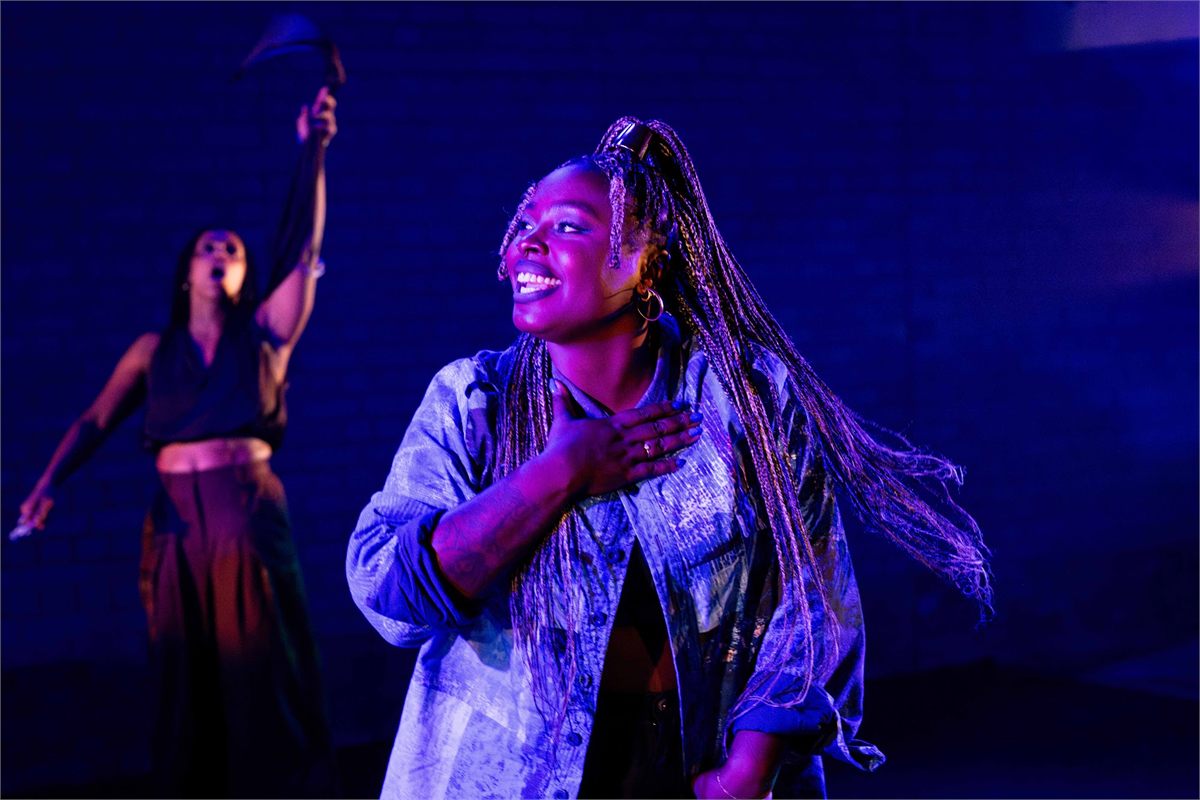
"Supported by a mesmeric new soundtrack by Jammz and choreography by Ingrid Mackinnon, the piece beats with raw feeling. The Ladies break into soulful, almost spiritual moments of dance, as Ali Hunter’s lighting design sends rainbows pulsing across the stage floor. The cast – Nadine Higgin, Tatenda Matsvai, Ibilola Rossi, Cherrelle Skeete and Alex Thomas-Smith – perform as though Shange’s words are being drawn from somewhere deep within them."
WhatsOnStage
Reviewer: Rachel Agyekum
The production also struggles to capture the full force of Shange’s revolutionary text. Her writing is emotionally charged, and radical, yet some lines come across as spoken from a script rather than drawn from lived experience. This weakens the sentimental intensity of the piece, leaving some of its most powerful moments feeling less impactful than they perhaps should.
All That Dazzles
“Ntozake Shange’s seminal choreopoem makes its long-awaited UK debut as part of the Yard Theatre’s grand re-opening”
Reviewer: Sam Waite
As the Ladies in Red and Blue respectively, Cherrelle Skeete and Nadine Higgin fare the best on this front, delivering some undeniably stirring monologues with a depth of passion and understanding. All five performers have their moments of strength, of course, but their talents at times feel muted by the presentation – what Diane Page’s direction offers in staggering touches of unity, it can occasionally lack in over-orchestrated solo deliveries. Alongside the aforementioned highlights from Skeete and Higgin, especially a rousing, passionate near-finale diatribe from Skeete, some real power comes from the measured opening monologues delivered by Ibilola Rossi, some of the more subtle moments but easily among the most striking.
BroadwayWorld
Reviewer: Cindy Marcolina
This is a landmark in feminist Black theatre for a reason. It’s unyielding and uncompromising, difficult to absorb and horribly real. However, it’s also fairly two-dimensional and reductive in its representation of abuse, portraying men’s toxic behaviours as mostly correlated to the sexual or romantic spheres of a woman’s life. Though the piece shows its age in many ways, it’s horrifying to realise how relevant it remains half a century on.
Alt A Review
Page’s for colored girls who have considered suicide refuses to make trauma the whole story. There is humour, joy, friendship, desire and celebration alongside the pain. These five Black and mixed-race women, and women in general, are not defined simply by what has happened to them, but by their ability to survive, support one another and reclaim their voices.
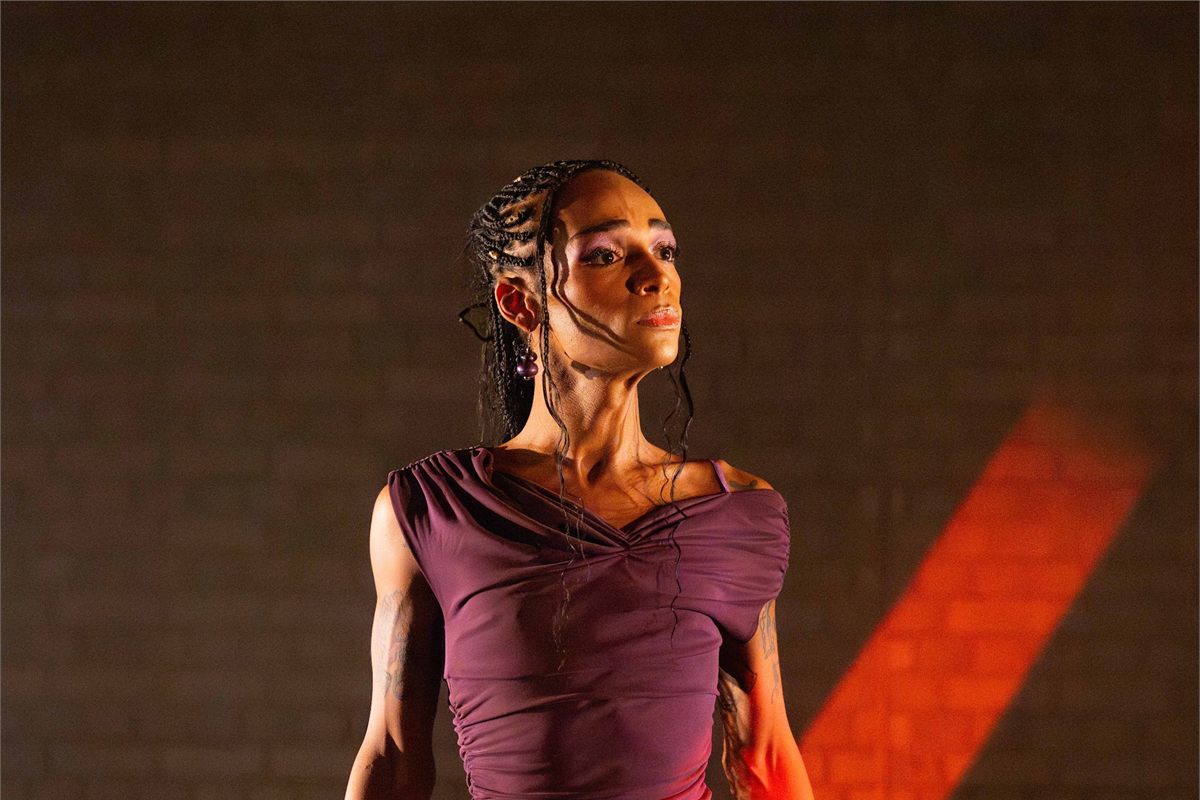
Production photographs by Camilla Greenwell.
Theatre Weekly
"Gives audiences a fantastic opportunity to see the theatrical trailblazer in all its glory"
Reviewer: Maggie O’Shea
"There’s a deep well of emotion in this piece and under the skilful direction of Diane Page, this adaptation brings it to life once more. The transition between stories is cleverly rendered, creating a sense of continuity and lending the characters an intimacy that’s hazily defined but still powerful. And of course, plenty of the emotional heft is delivered by the ensemble cast, who are consistently brilliant. Each of them gives a full-throated, full-bodied performance that feels like dance even when it isn’t."
Also reviewed by: The Stage (Holly O’Mahony, three stars, “Infused with passionate defiance”), and The Telegraph, whose reviews sit behind paywalls.
For more of what the critics made of this month’s openings, see our roundups of Kimberly Akimbo at Hampstead Theatre, Jane Eyre at Southwark Playhouse Elephant and The Story at the National Theatre. You can also see the full set of production images, and read how the run was extended by two weeks before its first performance.
for colored girls who have considered suicide / when the rainbow is enuf runs at the Yard Theatre, Hackney Wick, until 17 October 2026.