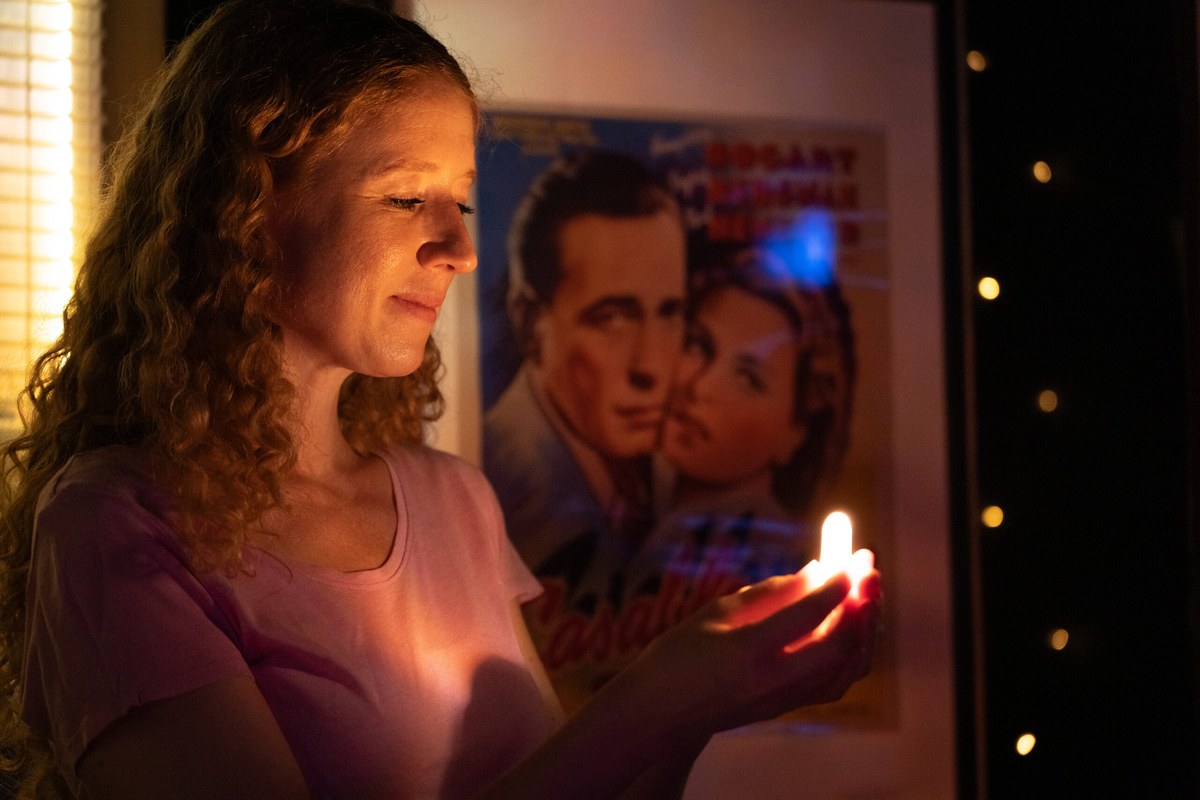
The reviews are in for We’ll Always Have Paris, Paul Kalburgi’s new play at the White Bear Theatre in Kennington, and the critics have come back warm but not unanimous. Directed by Kay Brattan for Exit the Garret and Open Page Productions, it follows Ginny, a cinema usher and would-be screenwriter in her forties, through a year of grief, dating apps and old black-and-white romances before the story reaches Paris. Nine outlets have filed, four of them four stars: they agree on Miranda Colmans, who never leaves the stage, and on the versatility of Cyril Blake and Eliza Williams in a dozen parts between them. They divide on the running time — two and a half hours, which some found generous to the grief and others found simply long.
The verdict: nine notices in so far — four four-star, three three-star, one two-and-a-half-star and one outlet that publishes no rating at all — the eight that score averaging 3.4 out of 5. Nearly every one of them praises Miranda Colmans, who carries the evening almost without leaving the stage, and several admire Gabriel Burns’s revolving louvred set. Where the critics part company is length and clutter: four are swept along by the play’s cinematic ambition, while four find the running time indulgent and the stage too full of props — a reservation Theatre Vibe shares, wishing the last half hour away.
What are critics saying about We’ll Always Have Paris?
All That Dazzles
Reviewer: Bhavni Joshi
“We’ll Always Have Paris also boasts a phenomenally talented cast, all effortlessly nailing the emotions of every scene. Cyril Blake was a pleasure to watch as multiple characters, able to flawlessly switch from the dorky Jerry to the flirty Seb. This was the perfect balance to the swinging emotions of Ginny, who was so well played by Miranda Colmans. Eliza Williams was a perfect anchor between the three, with her acting grounding the rest of the show. Every scene felt very real, and it was hard to resist the emotional power they held in the room. Kay Brattan effortlessly brings the play together through her exciting direction, nailing every aspect of the play such as the more tender moments between Ginny and Jerry, showing how beautifully in love they were.”
London Theatre Reviews
“A Fine Line between Love and Loss”
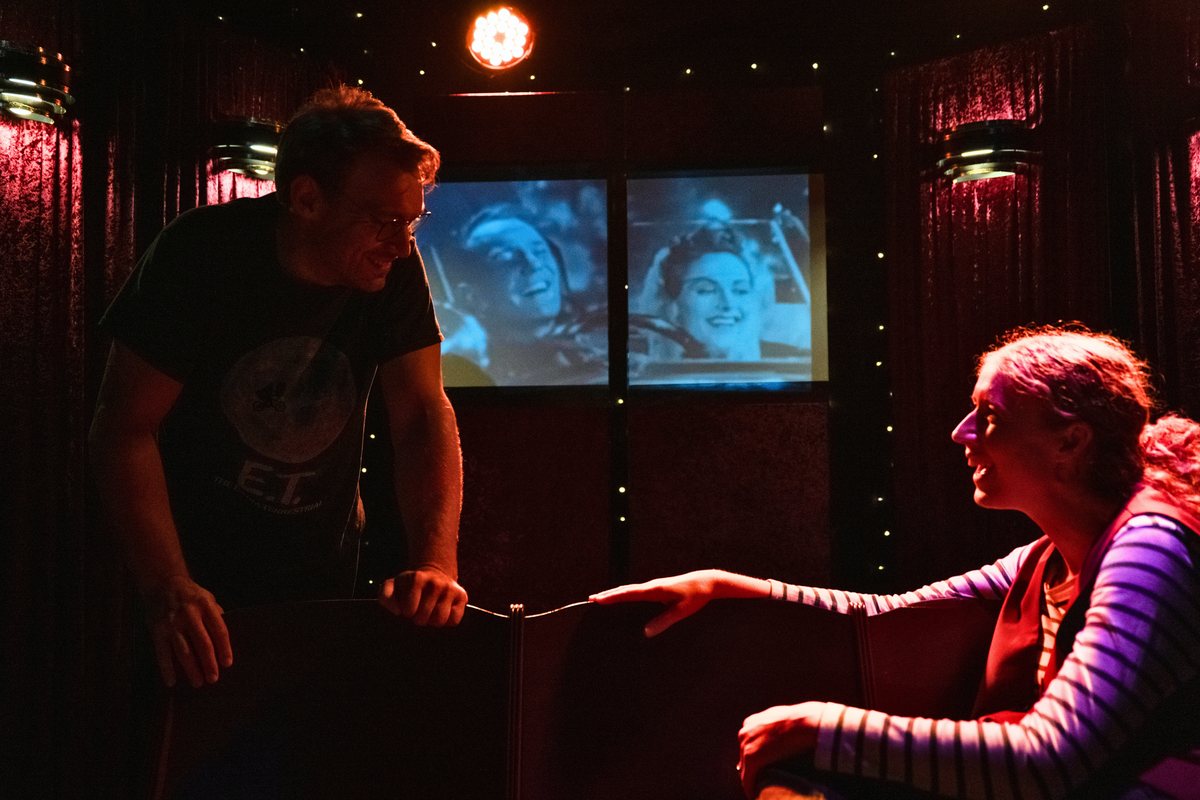
“In fact, there is a lot for movie lovers to enjoy on the margins of the central plot line, whether it is seeking to identify the black-and-white classics beamed in the background (both to fill some of the gaps for scene changes and to reinforce Ginny’s profession and passion with Jerry) or the clever use of music to frame a scene, from the ominous Jaws music to Lady and the Tramp. While it needed a crisper, perhaps less meta ending – the show seemed to almost resolve itself multiple times before settling on a more optimistic note – there is a lot to enjoy here. Perhaps it is time to give the multiplex a miss this time – and opt for a more realistic rom-com instead.”
A Young(ish) Perspective
Reviewer: Jessica Steans-Gail
“Miranda Colmans is devastatingly honest and laugh-out-loud funny as the sardonic, self-deprecating though self-aware, if slightly dysfunctional, Ginny. Cyril Blake and Eliza Williams support Colmans as a rotating cast of secondary characters that include Ginny’s mother, former classmate, and a long-list of misguided dating app matches. Blake and Williams make their exceedingly difficult jobs look easy and together demonstrate what subtle vocal and physical choices can do in the hands of truly talented performers to bring fully-realised and recognisable characters to life in seconds.”
Read Jessica Steans-Gail’s full review at A Young(ish) Perspective
The Recs
Reviewer: Erin Muldoon
“Much like Ginny’s internal conflict, what stands out most about this play is its ability to balance humour and emotional depth. An example is when the soundtrack is melancholy while the scene is comedic, and vice versa. Tasteful contrast between the atmosphere and the action is what allows Kalburgi’s writing to exist as more than just another cheesy rom-com, but rather a witty and compelling bit of theatre that is as heartwarming as it is hard-hitting.”
Everything Theatre
Reviewer: Philip Rham
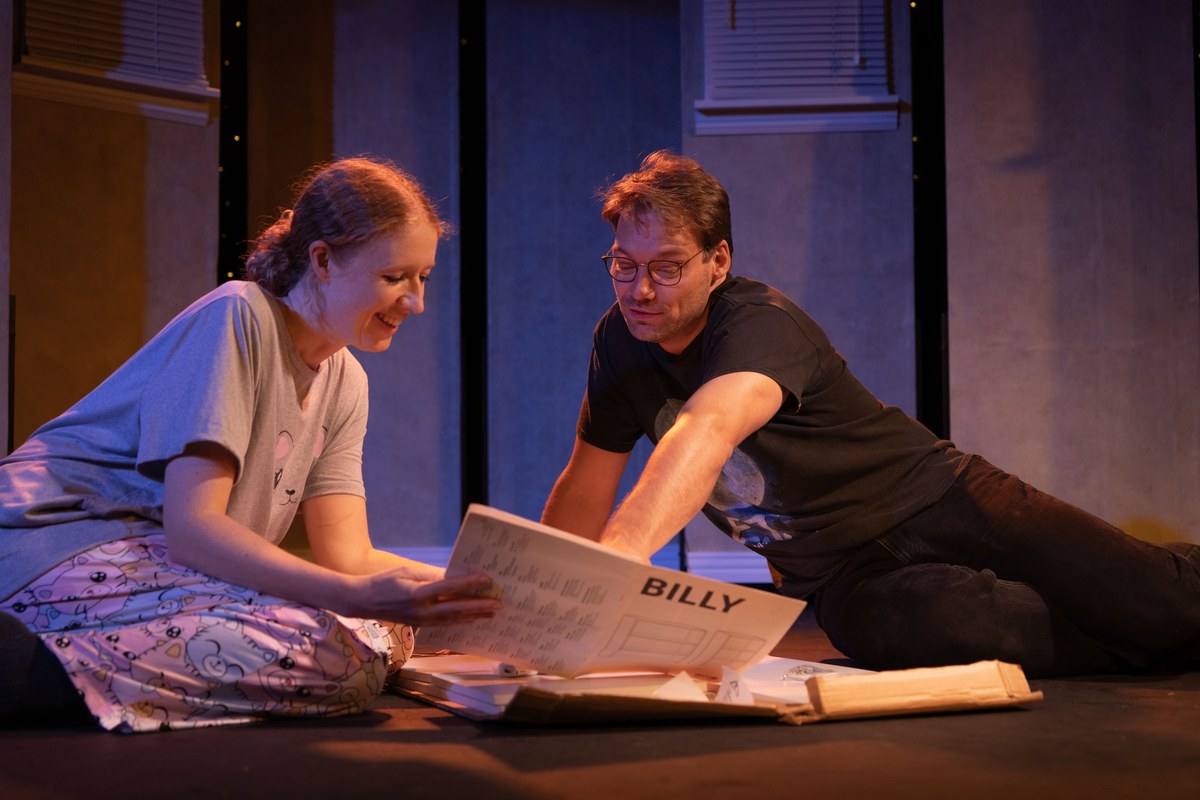
“Despite its initial charm, my main beef with this new play is that it is basically too long: 75 minutes for the first half and then 45 minutes for the second. There is not enough development of plot and dramatic tension to sustain this length. It should be a 70-minute work with no interval. It is essentially a monologue, and for us to engage with a central character, it needs much more layered psychological insight. Why not use the mother-daughter relationship more? They have both lost loved ones in tragic circumstances, and as it stands, theirs is the only relationship in the play that is explored and relatively substantial (thanks to Williams’s commitment). I just found it one-note dramatically. What are the stakes that increase the tension for the plot to reach a climax or some sort of resolution? Colmans, as Ginny, needs more meat to get her teeth into. Throwaway sardonic frustration at her life over this length of time is not enough to really connect with her. It is an amiable piece with some excellent dialogue, along with some appealing, committed performances, played out against an effective set, but it needs cutting and radical reworking.”
London Pub Theatres
“wonderfully clever and versatile performers”
Reviewer: Francis Beckett
“Colmans puts in a tremendous bravura performance. She takes us along with her moods, her ups and her downs, her happiness and her heartbreak. We laugh with her and cry with her, and it is Colmans we remember as we walk out of the theatre.”
LouReviews
“a smart and funny script that knows when to pull back”
Reviewer: Louise Penn
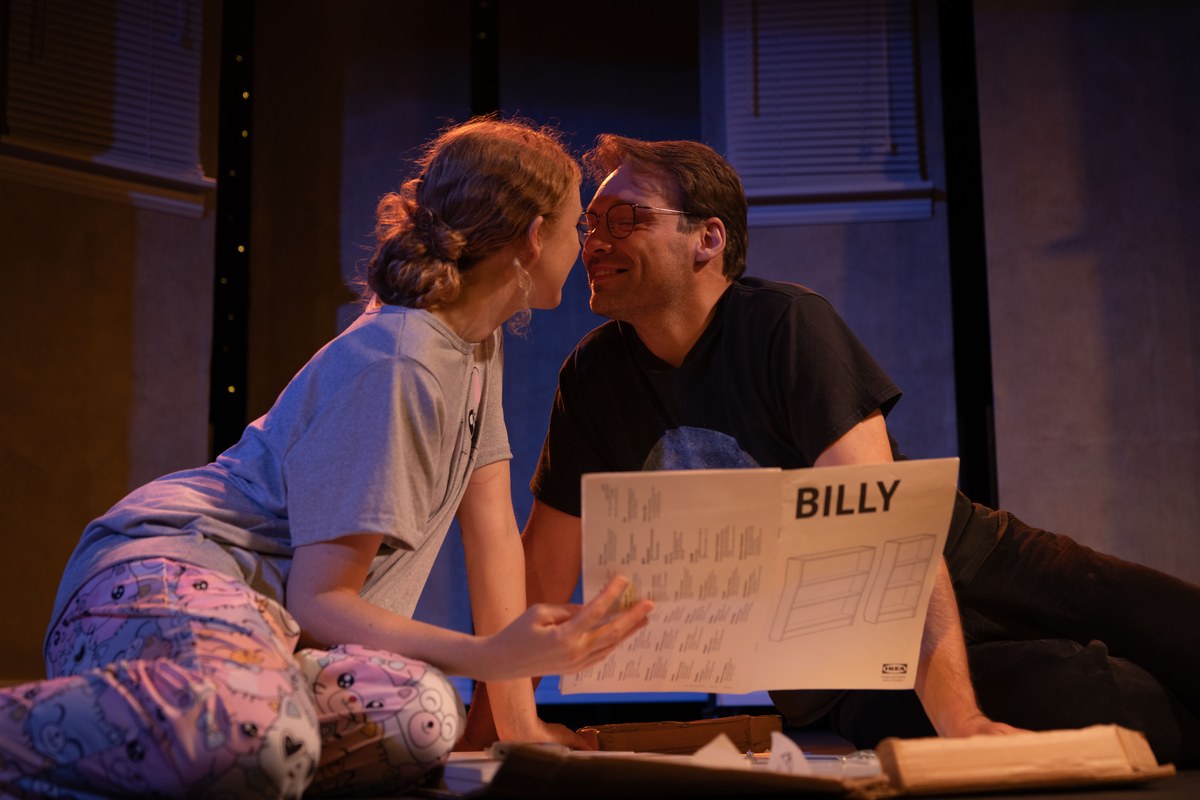
“Kay Brattan’s direction allows numerous characters into the space, while the film clips from Brief Encounter, Now Voyager, Charade, His Girl Friday and the like offer a commentary on the story and Ginny’s state of mind. However, a 2-hour running time seems a little excessive for a show that lacks a big dramatic arc. I would prefer a tighter show with some subplots excised – we possibly don’t need the snarky school friend.”
The Reviews Hub
Reviewer: Richard Maguire
“While it’s refreshing to see a play that doesn’t hurry pell-mell to its conclusion, We’ll Always Have Paris is far too long, stretching out to almost two and a half hours. Some scenes could easily be cut without affecting the story or its measured approach to grief and online dating.”
Theatre Vibe
“There is some really interesting writing here – the amputation metaphor for grief is one which hits home.”
Reviewer: Lizzie Loveridge
“Credited as Technical Designer is Gabriel Burns whose set of revolving white and red doors serves as backdrop and screens for playing of parts of black and white gloriously romantic moves from the 1940s like Casablanca and Brief Encounter. I kept seeing Celia Johnson, Humphrey Bogart, Trevor Howard and Audrey Hepburn. The arrangement of the doors means we are not just seeing clips but only sections of the full movie screen. I found the turning of the doors quite hypnotic.”
Production photographs by Guy Sindall.
For more of what the critics have been saying this month, see our roundups for The Turn of the Screw at the Arcola Theatre and Twenty Thousand Streets Under the Sky at Southwark Playhouse Borough.
We’ll Always Have Paris runs at the White Bear Theatre, Kennington, until Saturday 3 October 2026.